20,Oct 2026



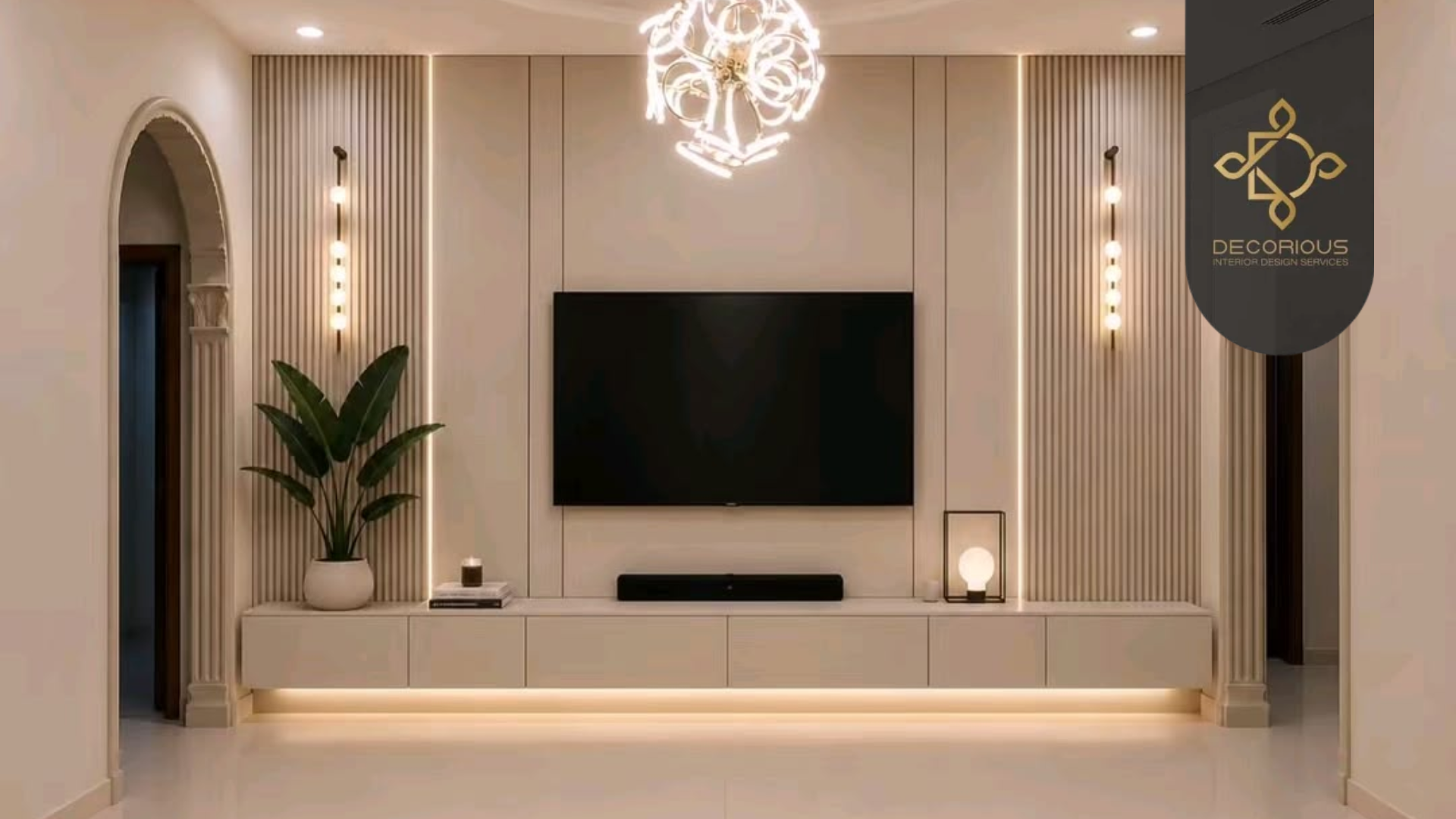
A good TV wall does two jobs: it gives the screen a clean, comfortable place to sit, and it becomes the focal point of the room when the TV is off. The best designs hide cables, add storage where it is useful, and use one main material, such as wood, marble or gypsum, with soft lighting to frame the screen. Below are 12 modern TV wall design ideas, followed by practical guidance on size, height and planning.
Fluted or slatted wood panels behind the TV add warmth and texture, and they hide the cable channel between the slats. Oak and walnut tones suit modern and Japandi interiors.
A large-format marble or marble-look porcelain slab creates a luxury feature wall with very few joints. Porcelain slabs are lighter, more stain-resistant and usually cost less than natural stone.
A gypsum board wall built slightly forward of the original wall lets you recess the TV so it sits flush, with hidden LED strips around the niche. It also creates space for cables and sockets behind.
For small rooms, a slim wall-hung console under the TV keeps the floor visible and makes the room feel larger. Keep the wall plain or add one subtle texture.
Open shelves or closed cabinets on either side of the TV turn the wall into a media and display unit. Use closed storage below for devices and open shelves above for books and decor.
Translucent onyx or backlit stone behind the TV gives a dramatic effect in the evening. It suits majlis and formal living rooms, but it needs careful lighting design so it does not compete with the screen.
A simple and affordable option: paint a darker rectangle or arch behind the TV to frame it. Deep green, navy or charcoal make the black screen blend in.
Upholstered panels soften sound, which helps in rooms with hard floors and high ceilings. They work well in bedrooms and home cinemas.
An electric or bio-ethanol fireplace below the TV creates a strong focal point. Keep the TV high enough above the fireplace and check that heat will not reach the screen.
Sliding wood or lacquered panels can cover the TV when it is not in use, which keeps formal living rooms and majlis spaces elegant.
Curved gypsum or a soft arch around the TV suits modern Arabic and contemporary interiors and softens a room full of straight lines.
In a bedroom, use the same panel material as the headboard on the opposite wall to tie the room together. Keep the design calm and avoid bright accent lights facing the bed.
A common rule is to sit about 1.2 to 1.6 times the screen diagonal away from a 4K TV. As a guide:
| TV size | Comfortable viewing distance |
|---|---|
| 55 inch | about 1.7–2.2 m |
| 65 inch | about 2.0–2.6 m |
| 75 inch | about 2.3–3.0 m |
| 85 inch | about 2.6–3.4 m |
Plan the TV wall width so the screen takes up roughly one third to one half of the feature area. A wall that is too small for the screen looks crowded.
For a living room, the centre of the screen is usually most comfortable at about 100–110 cm from the floor, close to eye level when seated. In bedrooms where you watch from the bed, it can be slightly higher. Avoid mounting a TV very high above a fireplace or console, as it strains the neck.
If your TV wall is part of a gypsum feature, see our Arabic guide to gypsum wall decor and TV walls for more design ideas.
Wood panels are the most popular for warmth and easy cable hiding. Marble or porcelain slabs suit luxury interiors, and gypsum is the most flexible for niches and lighting.
It often works well. A darker or textured wall reduces the contrast between the black screen and the wall, so the TV looks more integrated.
Yes, with a freestanding or lightly fixed panel system and a floating console. Check with your landlord before drilling into walls or changing electrical points.
Decorious designs and builds feature walls, joinery and lighting for homes across Dubai and the UAE. Explore our living room interior design and joinery production services, read our modern living room design guide, or book a free consultation.